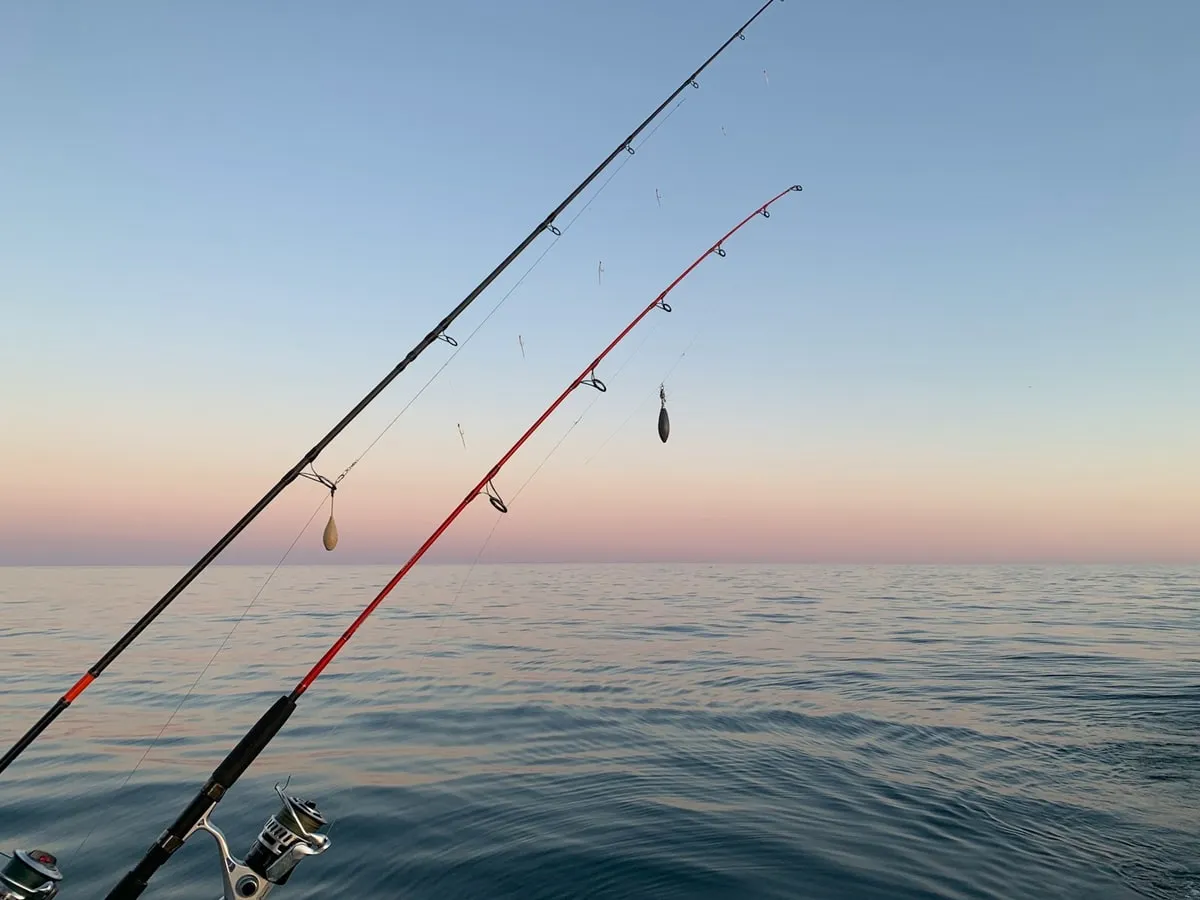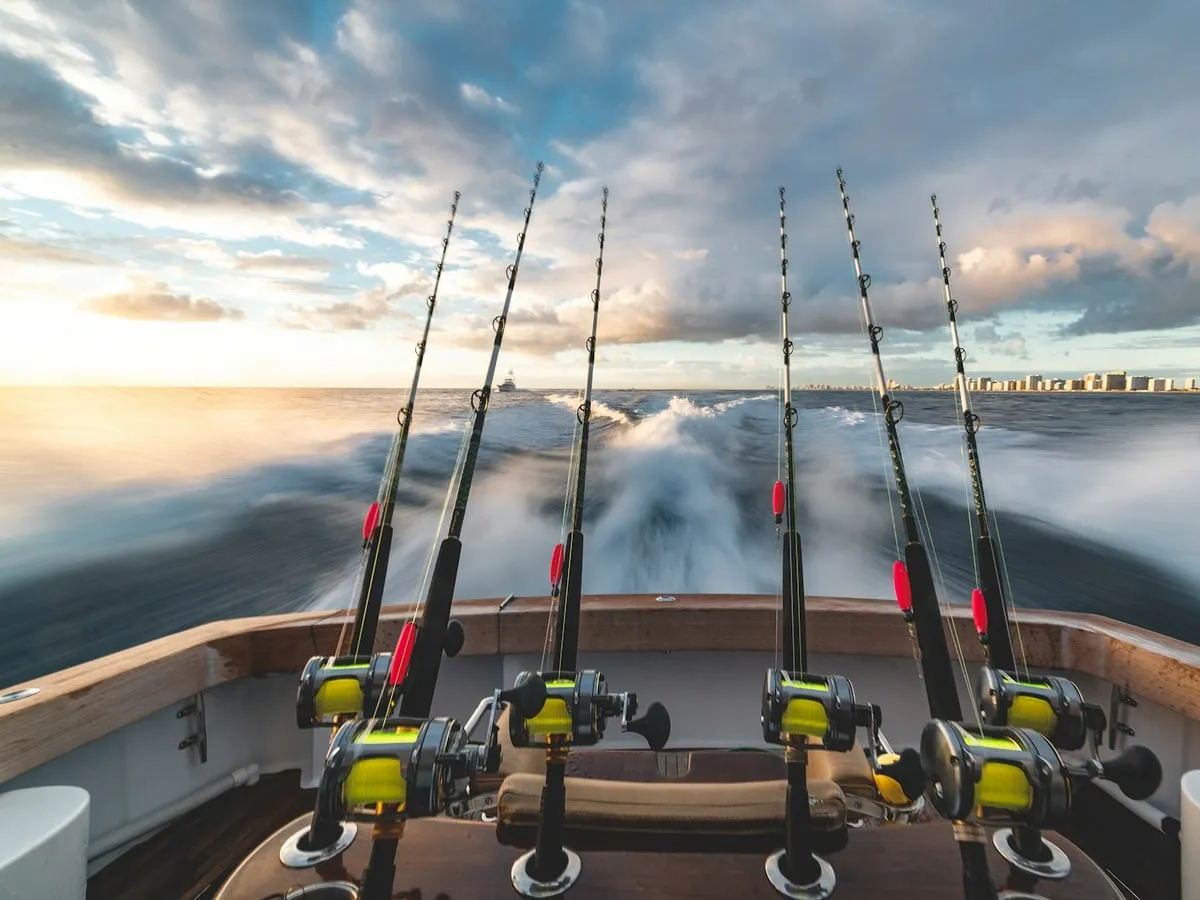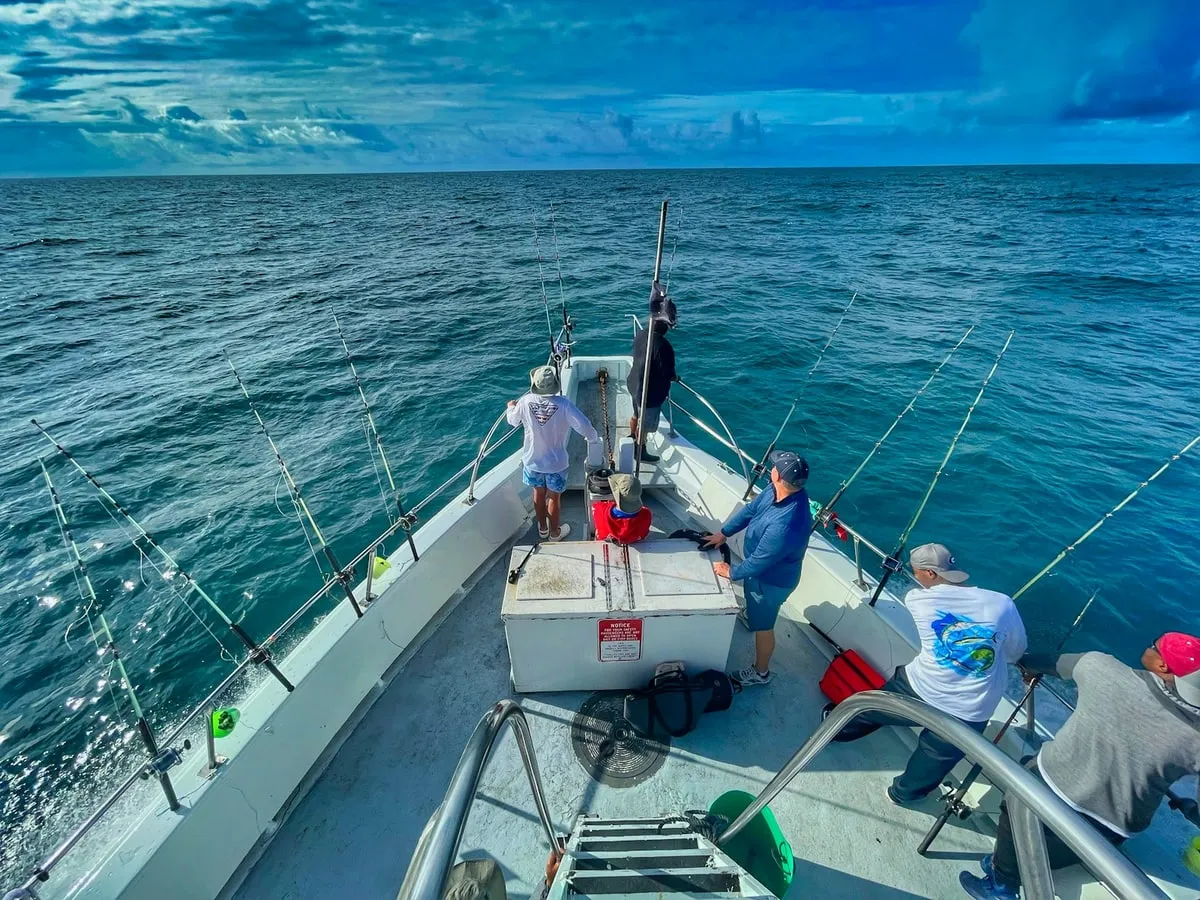
Full-day offshore
Bottom fishing over live reef for grouper, snapper and amberjack. Long enough to reach real structure, short enough to be back for dinner.
$600–1,200/boat8-hour average $1,198Checked September 2026
Check ratesOffshore
"Deep sea" gets printed on trips that never leave sight of the beach. Here is what each distance band really means, what swims there, and what the ride costs.
The Strand Guide is reader-supported. When you book through links on our site, we may earn a commission from our booking partners, at no extra cost to you.
The trips
Bottom fishing over live reef for grouper, snapper and amberjack. Long enough to reach real structure, short enough to be back for dinner.
Mahi, tuna and wahoo in blue water. Leaves before dawn and it’s a long ride each way. Skip it if anyone gets seasick.
You buy one seat, not the whole boat. Rod, bait and license included. Crowded on summer weekends, so go on a weekday morning.
The short answer
Most Myrtle Beach trips sold as deep sea fishing run 25 to 40 miles offshore and take eight to ten hours, at $600–1,200 for a private boat, with the eight-hour average at $1,198. True blue-water trips reach the Gulf Stream 50 to 70 miles out and take twelve hours or more, and run $2,000–2,600 for a private boat. A seat on a Gulf Stream head boat is the cheap way to do that same distance, at $145 to 169 per person. Anything under about ten miles is nearshore, whatever the listing calls it.
The distance decides the fish more than the boat or the captain does. If you want grouper and snapper you need live bottom, and live bottom starts around 25 miles out. If you are picturing mahi and tuna, that is a Gulf Stream day and there is no shortcut to it.
Based on 155 Myrtle Beach listings on FishingBooker plus published rate cards from eight Grand Strand operators, checked September 2026.
Prices checked September 2026 · Murrells Inlet, Little River & North Myrtle BeachBy distance
Four bands, four different days on the water. Match the band to the fish you actually want.
| Distance | What's there | Trip length | Worth knowing |
|---|---|---|---|
| 0–3 miles: nearshore | Spanish mackerel, bluefish, black sea bass, blacktip and spinner sharks in summer | 4–6 hours | Sold as "deep sea" more often than it should be. You can still see the high-rises. Fine for a first trip and fine with kids. |
| 10–25 miles: inner reef | Black sea bass, triggerfish, small grouper, king mackerel on the troll | 6–8 hours | The first honest deep-sea band. Real structure, real bottom fishing, and you are out of sight of land for most of it. |
| 25–40 miles: live bottom | Gag and red grouper, vermilion snapper, amberjack | 8–10 hours | Where a full-day offshore charter actually spends its day. The best fish-per-dollar band on the Strand. |
| 50–70 miles: the Gulf Stream | Mahi, blackfin and yellowfin tuna, wahoo, sailfish | 12+ hours | Blue water. Three hours out, three hours back, and the fishing in between is unlike anything closer in. Not a beginner trip. |
Choosing
A half day offshore is mostly a compromise. Two hours of the four are spent running, which leaves you little fishing time for the money. If your budget only stretches to half a day, spend it inshore at $300–525 instead. You will catch more.
The full day at $600–1,200 is the trip most people should book. Eight to ten hours gets you to live bottom with real time to fish it, and you are back at the dock in time for dinner. May and June are the best weeks for it: the fish are close, the water is calm, and the afternoon storms have not started yet.
The Gulf Stream run at $2,000–2,600 is a different sport. Leave before dawn, three hours out, three hours back. Book it if blue-water fish are the point of the trip and everyone aboard has been offshore before. Skip it in August, when afternoon storms out there end days early and you cannot outrun them from 60 miles.
You leave in the dark. The inlet is black and the only things you can see are channel markers and the wake of whoever left ahead of you. Nobody talks much for the first half hour because it is too early and too loud.
Then the sky goes grey, then pink, and you are far enough out that there is nothing on the horizon to interrupt it. Flying fish come off the bow. Gannets and shearwaters work bait balls in the distance. On a good morning you will see dolphins running the boat, sea turtles on the surface, and, if the season is right, cobia sitting under a ray like they are waiting for something. Most people who book these trips for the fish end up talking about that first hour instead.
Some of your group will, and the ones who insist they won't are usually the ones who do. Offshore swell is long and slow rather than choppy, which is easier on most people than the inlet chop, but a ten-hour day gives it plenty of time to work on you.
There are no refunds for a short day because someone is ill, and a private boat will not usually turn back for one person. That risk is the real argument for starting closer in.
Bring more water than you think you need, sun cover you can keep on for ten hours, and a soft cooler. Hard coolers take deck space captains would rather use.
Seasonal updates
What is biting each month, what a trip costs then, and when to book it. A few emails a year, sent when the seasons turn.
Sign-up is not open yet. Nothing is collected here and no address is stored.